




Annular Cutter vs. Twist Drill Bit: Which is Better for Metal Drilling? (2026 Guide)
1. The Core Difference: How They Cut
To understand the efficiency gap, we must look at the mechanics of material removal.
• Twist Drill Bits: These bits remove the entire diameter of the hole, converting all the metal into chips. This requires massive torque and significant downward pressure.
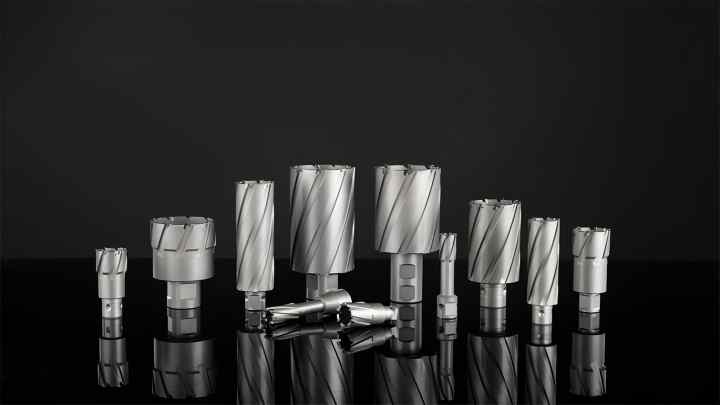
• Annular Cutters (Core Drills): These are hollow in the center. They only cut the periphery (the rim) of the hole, leaving a solid "slug" or core behind.
Key Takeaway: Because they remove less material (up to 70% less), annular cutters are inherently faster and more energy-efficient.
2. Performance Comparison: By the Numbers
Based on 2026 industrial benchmarks, here is how the two stack up in a head-to-head comparison:
| Feature | Annular Cutter (HSS/TCT) | Traditional Twist Drill |
| Drilling Speed | 3x – 4x Faster | Standard |
| Hole Accuracy | Burr-free, +/- 0.004" accuracy | May require reaming/deburring |
| Power Consumption | Low (saves energy/motor life) | High (requires high-torque machines) |
| Tool Life | 5x – 10x Longer | Standard |
| Pre-drilling | Not required | Often requires "step drilling" |
3. Top Benefits of Switching to Annular Cutters
Ultra-Fast Cycle Times
In production environments, time is money. Since an annular cutter has multiple cutting teeth (unlike the 2-edge design of a twist drill), it can maintain a much higher feed rate. This can reduce your drilling time by over 300%.
Superior Hole Quality
Forget about secondary finishing. Annular cutters produce smooth, surgical-grade holes with minimal burrs. This is critical when working with stainless steel or structural beams where precision is non-negotiable.
Portability and Versatility
Because they require less horsepower, you can use larger diameter cutters on smaller, portable magnetic drill machines (Mag Drills). This allows you to bring the machine to the workpiece, rather than hauling heavy steel to a massive radial drill press.
4. When Should You Still Use a Twist Drill Bit?
Despite the advantages of annular cutters, twist drills still have their place in 2026:
- Small Diameter Holes: For holes smaller than 7/16" (11mm), twist drills are more practical.
- Blind Holes: If you aren't drilling all the way through the material, an annular cutter cannot be used.
- Handheld Applications: Twist drills are better suited for handheld power drills where a rigid setup isn't possible.
5. Cost-Benefit Analysis: ROI for Your Shop
While the upfront cost of an HSS or TCT annular cutter is higher than a twist drill, the Total Cost per Hole is significantly lower.
- Less Labor: Faster drilling means fewer man-hours.
- Longer Lifespan: One high-quality TCT cutter can outlast a dozen cheap twist drills.
- Reduced Machine Wear: Lower torque requirements extend the life of your magnetic drills.
Conclusion: The Verdict
If your work involves drilling holes larger than 12mm in steel plates or pipes, the annular cutter is the clear winner for 2026. It offers better precision, faster turnaround, and a lower long-term cost.
Ready to upgrade your toolkit? Explore our latest range of [TCT Annular Cutters] and [Industrial Mag Drills] to boost your shop's productivity today.
💡 SEO Keywords Used:
- Annular cutter vs twist drill bit
- Magnetic drill machine (Mag drill)
- Metal drilling efficiency 2026
- TCT vs HSS annular cutters
- Industrial hole-making tools
- Precision metal fabrication